You walk out at dawn with your coffee and check the pond, the way koi people do. Most mornings, the fish glide up to greet you. The morning you find them hanging at the surface, mouths working in the air, your stomach drops. Pond fountains often get blamed or praised in that moment, and the truth sits somewhere in between.
A fountain can help your koi breathe, and it can also work against them if you set it up wrong. Koi are not cheap, and a prized fish lost overnight stings for a long time. So this is worth getting right. Here is what pond fountains do well for koi, and where they quietly fall short of protecting the fish you care about.
Why Koi Need More Oxygen than You Think
Koi are oxygen-hungry animals. They sit healthiest with dissolved oxygen around 7 to 9 milligrams per liter. Drop below 4, and they grow stressed. Below 2, they start to die, with the largest koi going first because their bodies demand the most.
Summer sets a trap. Warm water holds less oxygen than cool water, yet your koi burn through more of it as their metabolism speeds up in the heat. The worst dip comes before dawn, roughly between 2 and 6 in the morning, when plants and algae have spent the night consuming oxygen instead of making it. That is the window when a pond can turn from safe to deadly while you sleep. The numbers make it plain. Water near 50 degrees can hold roughly 11 milligrams per liter of oxygen, but at 80 degrees that capacity falls to around 8. Less oxygen in the water, more demand from the fish, and a long dark night with no sunlight to refill it.
How Pond Fountains Help Your Koi
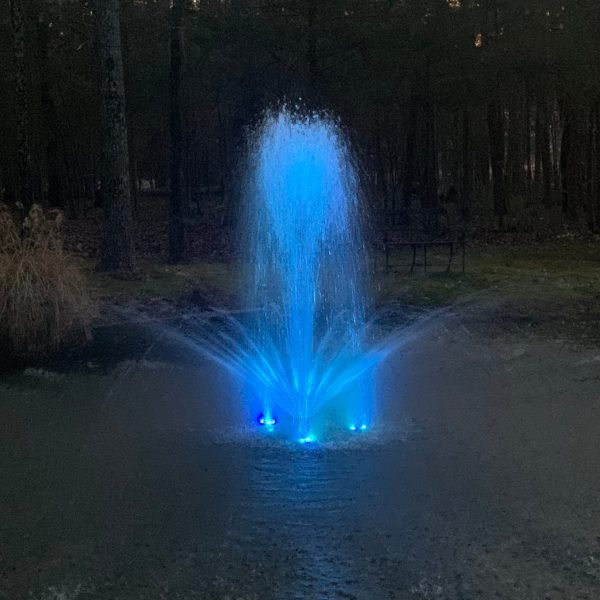
A fountain pushes water into the air and lets it fall back, which pulls oxygen in and drives off gases the fish do not want. That surface motion raises dissolved oxygen during the day and stops the water from going stagnant. For a shallow koi pond, a well-placed fountain genuinely supports the fish.

It does more than feed the koi, too. The same oxygen keeps your filter bacteria alive, and those bacteria turn toxic ammonia into safer compounds. So the spray you enjoy looking at also props up the whole system underneath. On a hot afternoon, that moving water is doing real work. Many koi keepers run a fountain for the daytime lift and the look, then lean on steadier aeration for the hours that matter most.
Where a Fountain Falls Short and Hurts the Fish
Here is the part that catches koi keepers out. A surface fountain treats the top of the pond. Your koi spend most of their time near the bottom, and in a deeper pond, the spray never reaches them. The water can look lively up top while the lower layer runs low on oxygen, exactly where the fish sit, exactly when the pre-dawn crash hits.
That gap fools people. A pretty fountain feels like proof the oxygen problem is handled, so the keeper relaxes. Then a warm night arrives, and the koi crowd the surface, gasping. For ponds deeper than about four feet, koi guides suggest adding bottom aeration with a diffuser, so oxygen reaches the fish instead of staying near the surface. The fountain becomes the helper, not the safeguard.
See also: The Importance of Whitepapers in Crypto
Warning Signs Your Koi are Short on Oxygen
Your fish tell you before a test kit does. Watch for these, and act fast if you see them:
- Gasping or piping at the surface with their mouths at the top, which is an emergency
- Crowding around the fountain or the water return, chasing the one spot with the most oxygen
- Sitting still on the bottom and ignoring food they normally rush toward
- The biggest, oldest koi is struggling first, while smaller fish still look fine.
Catch any of these early, and you can add air before a slow problem turns into dead fish.
Setting Up Pond Fountains Without Stressing Your Koi
Oxygen is the goal, but the way you run the fountain matters for the fish. A few habits keep the help from turning into harm:
- Leave calm zones, since constant heavy current tires koi, especially older fish with long fins.
- Guard the intake with a proper screen so small koi and trailing fins stay safe.
- Position the unit so it does not stir settled muck off the bottom, which clouds the water and releases trapped gases.
- Run aeration day and night, all year, because the dangerous crashes come in the hours you are not watching.
- In winter, keep the moving water shallow so the warm bottom layer stays put for the resting koi.
None of that is hard. It just turns a fountain from a decoration into something your fish actually benefit from.
For koi, a fountain is a help, not a promise. The spray you watch works the surface, but your fish live and struggle near the bottom, in the dark hours when you are asleep. Give them oxygen that reaches where they sit, keep the current gentle and the intake safe, and let the water move around the clock. Do that, and the dawn walk to the pond brings calm, hungry koi instead of a scare you will not forget.